Heavy inert materials present specific structural demands that general mixed-waste containers cannot handle safely. In neighborhoods like Hyde Park and Bouldin Creek, aged residential flatwork, stone borders, and…
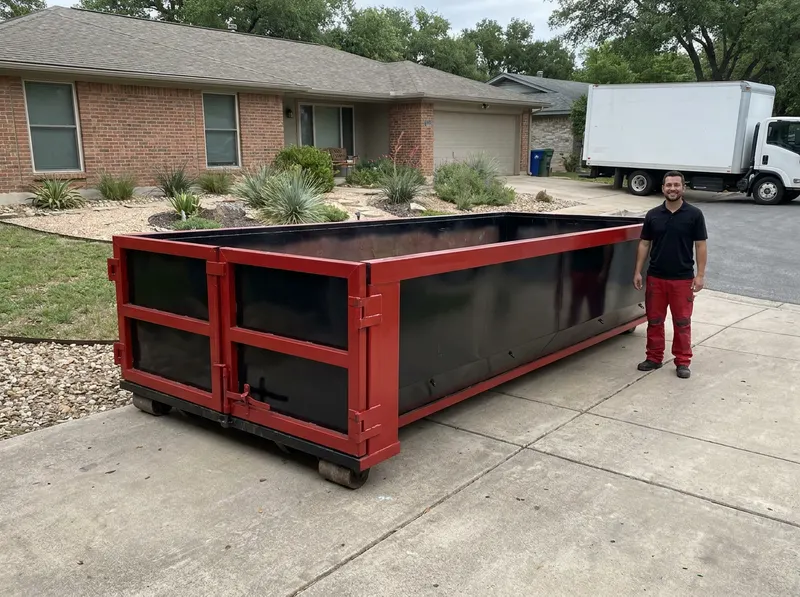
Heavy inert materials present specific structural demands that general mixed-waste containers cannot handle safely. In neighborhoods like Hyde Park and Bouldin Creek, aged residential flatwork, stone borders, and foundation footings demand rigid roll-off bins with reinforced steel beds. Stacking dense masonry inside a standard high-walled bin risks exceeding legal road weight ratings before the container is half full. Concrete-specific rentals keep side walls low to prevent accidental overloading, allowing a mini-excavator or two-person wheelbarrow crew to tip broken limestone or driveway slabs over the side without excessive lifting.
Placement precision protects finished residential surfaces from structural cracking. Standard single-axle or tandem-axle transport trucks exert substantial downward pressure when lowering heavy steel rollers onto asphalt or concrete aprons. Placement in residential settings like Circle C Ranch or Tarrytown requires timber load-dispersal planks directly under the contact wheels to protect aggregate driveways from gouges, spalling, or edge breaks. This approach isolates masonry dust and concrete fragments to a designated footprint, keeping sidewalks, parked vehicles, and surrounding lawns clear of sharp rubble throughout the demolition process.
Selecting the right container size depends on square footage and material density rather than pure bulk volume. If you are tearing out a standard 4-inch-thick patio slab or walkway up to 250 square feet, a 10-yard container at $595 provides adequate containment while staying strictly within safe hauling limits. If the scope includes thick structural retaining walls, stone veneer removal, or large pool-deck demolition in Zilker or East Austin, a 20-yard container at $695 accommodates higher debris counts without requiring multiple container exchanges. The operational trade-off centers on available staging footprint versus total material density: smaller footprints preserve garage and vehicle access on tight urban streets, whereas larger bins require an unobstructed 40-foot pull-in lane.
Step 1: Calculate the total square footage and thickness of your masonry tear-out before booking. Step 2: Clear an 11-foot-wide lane on your paved driveway and verify overhead clearance from tree canopies or low-hanging service drops. Step 3: Call (254) 489-4784 to confirm a designated delivery window aligned with your breaker equipment. Step 4: Wheelbarrow broken slab pieces and brick rubble directly through the rear swinging gate to pack the bed evenly. Step 5: Notify the dispatch team once debris sits level with the container top rail for prompt collection and certified inert recycling.
Every job gets a firm, written price after a free on-site visit.
Tell us about your concrete and masonry dumpsters job in Austin and we'll send a clear, written quote, usually the same day.
 Silver Ridge Dumpster Rental